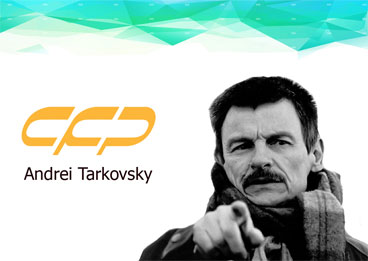
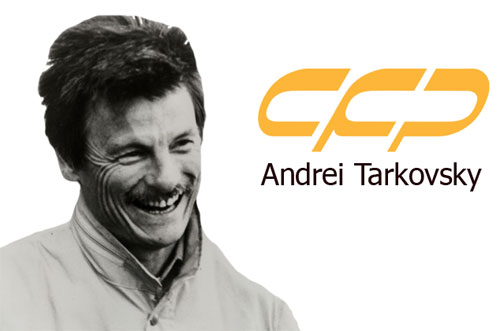
Andrei Tarkovsky biography | Andrei Tarkovsky: Andrei Tarkovsky biography, Tarkovsky was born in the village of Zavrazhye in Ivanovo Oblast (April 4th, 1932 – December 29th 1986). His father was one of the most important Russian poets Arseny Alexandrovich Tarkovsky, native of Kirovohrad, Ukraine, and his mother; Maria Ivanova Vishnyakova, a graduate of the Maxim Gorky Literature Institute worked as a proof-reader.
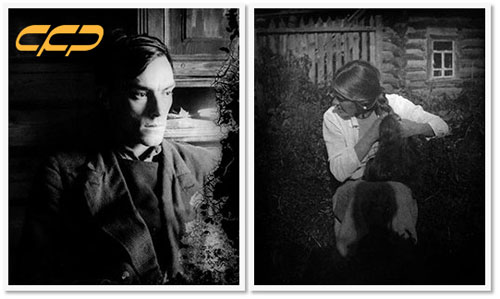
village of Zavrazhye (Andrei Tarkovsky)
Tarkovsky’s Parent
Tarkovsky spent his childhood in Yuryevets. In 1937, his father left the family. For Andrei it was a tragic event which affected him greatly. Tarkovsky stayed with his mother, moving with her and his sister Marina to Moscow, where she worked as a proofreader at a printing press. In 1939, Tarkovsky enrolled at the Moscow School No 554. During the war the family evacuated to Yuryevets, living with his maternal grandmother. In 1943, the family returned to Moscow. Tarkovsky’s father went to the front when the war started and returned as an invalid, with an amputated leg.
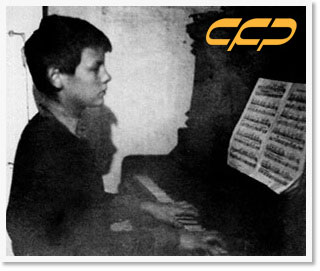
Tarkovsky mother wanted her son to be educated in the field of art and music. He learned piano at a music school and attended classes at an art school. He was interested in literature and especially in poetry. The family lived in the center of Moscow, on Shshipok Street in the Zamoskvorechye District in Moscow. Many themes of his childhood – the evacuation, his mother and her two children, the withdrawn father were later reflected in his film The Mirror. After high school graduation, from 1951 to 1952, Tarkovsky studied Arabic at the Oriental Institute in Moscow. Soon he lost interest in this specialization and did not finish his studies. He participated in a research expedition to the river Kureikye near Turukhansk in the Krasnoyarsk Province. During this time in the Taiga Tarkovsky decided to study film. Upon return from the research expedition in 1954, Tarkovsky applied at the State Institute of Cinematography (VGIK). It was one of the most prestigious Universities in Russia and Andrei had to pass a very tight competition. He successfully passed the entrance test and was admitted to the film-directing-program. The early Khrushchev era offered new opportunities for young film directors. Before 1953, annual film production was low. After 1953, more films were produced, many of them by new directors. The Khrushchev Thaw opened Soviet society and allowed, to some degree, Western literature, films and music. It gave to Tarkovsky the chance to see films of the Italian neorealists, French New Wave, and of directors such as Kurosawa, Buñuel, Bergman, Bresson. These directors became a very important influence for Andrei. Tarkovsky’s teacher and mentor was Mikhail Romm, who taught many film students who would later become influential film directors, such as Shukshin and Konchalovsky. In 1956, Tarkovsky directed his first student short film, The Killers, from a short story of Ernest Hemingway. An important influence on Tarkovsky was the film director Grigori Chukhrai, who was teaching at the VGIK. Impressed by the talent of his student, Chukhrai offered Tarkovsky a position as assistant director for his film Clear Skies. Tarkovsky initially showed interest, but then decided to concentrate on his studies and his own projects. In 1957 Andrei Tarkovsky married Irma Rausch, who studied with him.
Their marriage lasted until 1970. The Steamroller and the Violin earned Tarkovsky his diploma in 1960 and won the first prize at the New York Student Film Festival in 1961. Already in the early student film “The Steamroller and the Violin” a master’s hand is visible, investigating the troubled drama of existence. The young director shows the contrast of brute force and the fragile beauty of the asphalt rink and a children’s violin. Tarkovsky’s first feature film was Ivan’s Childhood in 1962. He had inherited the film from director Eduard Abalov, who had to abort the project. The film earned Tarkovsky international acclaim and won the Golden Lion award at the Venice Film Festival in 1962. In the same year, on September 30, his first son Arseny (called after Tarkovsky father) from his marriage with Irina Raush was born. In the film, based on the story by Vladimir Bogomolov “Ivan”, the director tells of himself and his generation, those whose childhood was divided by the war. But “Ivan’s Childhood” – is not just another war film. It’s more of an apocalyptic picture. Boy’s shower, a symbol of purity, in a collision with a dark, dirty war. Andrei Tarkovsky shows the confrontation of two substances: human history, the events of cosmic scale – and a single destiny. Whole era tied with the spiritual path of the individual. From the small warrior Ivan stretches a yarn to those heroes who lay on their shoulders the burden of responsibility for the planet and his feat is sacrificing his dream to save humanity. The picture “Andrei Rublev” was conceived as biographical, but went far beyond the genre. Tarkovsky was able to accomplish the impossible: truthful, amounting to naturalism picture with stories penetrating into non material existence. This is the mystery of the film. The gap between the life and the ideal – the cause of profound human suffering. Harmony is born from disharmony. At the end of the film – a light blows out the sun. After a black-and-white, almost hopeless reality – the colorful beauty of the frescoes and icons. The meaning of the picture – the light emerged from the darkness.
In 1979 Tarkovsky marries for the second time.
In the early 70’s Tarkovsky looks into the drama of the individual who is losing ground. His heroes went through the cold space of “Solaris” and the ecological horror in “Stalker” and the “mirror” reflecting the loneliness of the artist. In 1970 Andrei Tarkovsky married Larisa Kizilova who was his assistant since 1965. She was expecting a child. Their son Andrei was born in 1970.
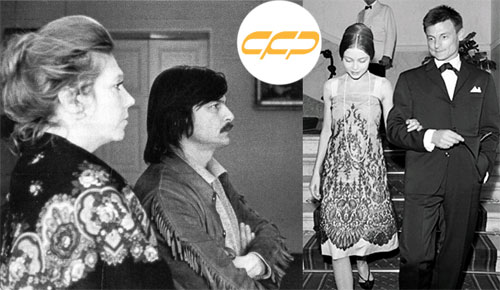
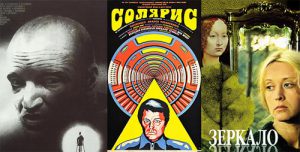
“Solaris”, filmed after the novel by Stanislaw Lem, is very different from the original source. The novel is about the difficulty or impossibility of space contacts. In Tarkovsky’s film the real issue is the human and the inhuman, the earth and the man. It is also about a man and his conscience. This film is about loneliness, and about overcoming it. “A man needs a man” – says one of the characters.
The most personal film by Andrei Tarkovsky is “Mirror”. It was crafted from dear to him details and family memories. This is a story about how past and present merge. Originally the film was called “White Day” like the poem by Arseny Tarkovsky which is recited in the film. When cinemas released the film “Stalker”, the Zone, the place to which the main character leads people who hope that their wishes will be fulfilled, was only a fantasy. Today we see it as an accomplished prophecy of a huge trouble.
In April 1986 Chernobyl created a similar thirty-kilometer zone. “Stalker” is an allegorical film. It is a reflection of the modern world. Mankind has put itself into a dead end, but you must have faith that it will be able to get out. The film was based on the novel by Strugatsky “Roadside Picnic” but it is very different from the source. The showing of “Sacrifice” almost coincided with the horrific events in Ukraine. All Western newspapers wrote that Tarkovsky foresaw nuclear disaster in Chernobyl, and the film is about it.
Andrei Tarkovsky Filmography
-
1956: The Killers (19 min)
-
1959: There Will be No Leave Today (46 min)
-
1961: The Steamroller and the Violin (46 min)
-
1962: Ivan’s Childhood (95 min)
-
1966: Andrei Rublev (205 min)
-
1972: Solaris (165 min)
-
1975: Mirror (107 min)
-
1979: Stalker (164 min)
-
1983: Nostalghia (125 min)
-
1983: Voyage in Time (63 min)
-
1986: The Sacrifice (149 min)